by Hobbs • 10 NOV 2026

FCL VS LCL

Choosing between full container load (FCL) and less than container load (LCL) shipping matters for any business moving goods by sea. Knowing how each method works, what drives costs, and how they fit your cargo and supply chain can save time and money. This guide explains FCL vs LCL shipping in NZ, so you can pick the container approach that suits your business needs.

What is the Difference Between FCL & LCL?

Full container load, or FCL, means your shipment has exclusive use of a container, whether it's full or not. This gives you more control during loading and unloading, fewer people handling the cargo, and often faster movement through ports. Less than container load (LCL) puts your goods with other shippers in the same container. It works well for smaller volumes that do not justify hiring an entire container. Each method suits different shipment sizes, timing needs, and risk tolerance.

Compare FCL vs LCL at a Glance

Key Differences Table
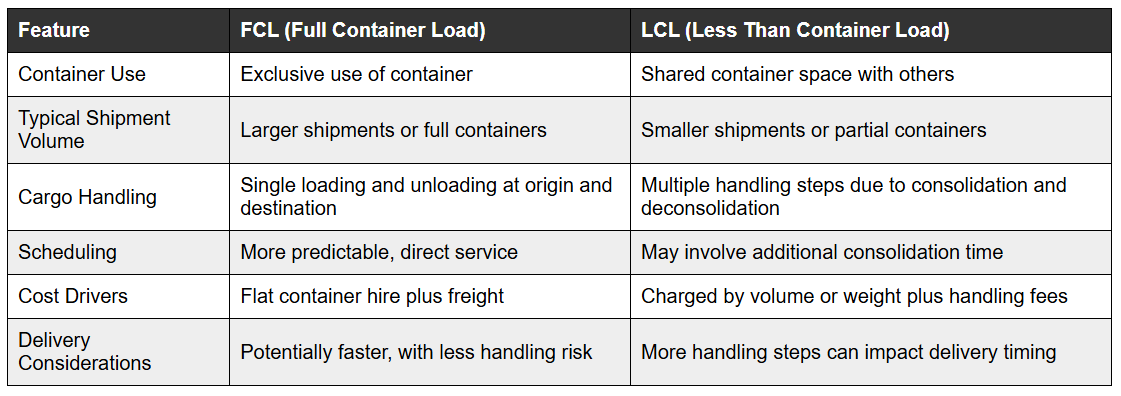
This quick comparison shows how shipment size, handling tolerance, and scheduling influence the best choice.

Match The Shipping Option To Your Cargo Needs

Cargo dimensions, weight, packaging, stackability, and shipping frequency all matter. Bulky or heavy goods that fill a container typically make FCL the cheaper, simpler choice. Small, irregular, or low-volume consignments often suit LCL because you pay only for the space you use. Frequent small shipments can benefit from LCL flexibility. Regular, high-volume traffic favours FCL for lower per-unit cost and simpler handling. Fragile or specialised goods may need particular care, which can push the decision one way or the other.

Compare The Complete Shipping Quote For FCL & LCL

A like-for-like quote comparison needs more than the headline freight rate. Include origin charges, port fees, documentation, ocean freight, destination handling, customs clearance, and final delivery. Watch for extras such as container demurrage or storage fees. Compare the same service level, for example, door-to-door versus terminal-to-terminal, to avoid unexpected charges.

Consider Handling & Delivery Requirements

LCL shipments usually go through consolidation at origin and deconsolidation at destination, adding handling steps and time. FCL moves as a single unit, reducing the risk of damage and often speeding processing. Still, transit times depend on whether there is direct service to your destination and on connecting inland transport. Factor in local trucking, warehousing, and any special handling needs when estimating total delivery time and cost.

Balance Stock Availability & Cash Flow For NZ Businesses

For New Zealand businesses, stock levels and shipping frequency involve a trade-off. Larger, less frequent FCL shipments cut per-unit transport costs, but they tie up capital and require storage. Smaller, more frequent LCL shipments free up cash and reduce storage pressure, but they raise per-unit shipping costs. Match your purchasing and inventory plans to demand patterns and storage capacity to keep the supply chain healthy.

Prepare For A Shipment-Specific Assessment

To get tailored advice, share your shipment specifics: product type, packaging quantity, dimensions, weight, origin and destination ports, cargo-ready date, and required delivery date. These details let freight professionals evaluate routing, container choices, consolidation options, and provide accurate cost estimates.

Discuss Your Container Shipping Options With Hobbs Global

Hobbs Global Logistics Solutions, based in Auckland, specialises in helping businesses choose between FCL and LCL in NZ. With experience across international freight and customs brokerage, the team can streamline your sea freight from origin to final delivery. Contact Hobbs Global to discuss your cargo, routes, and timelines, and get a recommendation that fits your logistics requirements.

Recommended
View All

Air Freight vs Sea Freight: Which Suits Your NZ Retail Business?

Choosing between air freight vs sea freight is a common decision for New Zealand retailers managing international shipments. Cargo size, urgency, cost, and delivery complexity differ significantly between the two. The right choice helps keep shelves stocked, customers happy, and inventory costs under control. This guide outlines the differences, walks through the delivery journey, and explains what Hobbs Global needs to tailor a freight recommendation for your retail business. Start With Your Shipment Requirements Consider Cargo Dimensions Weight Size and weight are often the first filters. Small, light consignments usually suit air freight because airlines charge by weight and space is limited. Large, heavy loads typically suit sea freight, where containers hold far more volume and shipping costs scale differently. Assess Cargo Value Urgency High-value or time-critical items tend to go by air for speed and tighter security. If the shipment can wait, sea freight often delivers the cost savings needed to protect margins. Evaluate Stock Availability Inventory Needs How steady your sales are matters. If you can forecast and order well ahead, sea freight usually makes sense. If demand is volatile or a sudden trend emerges, air freight gives retailers the quick response they need. Compare Air Sea Freight Key Differences in Scheduling Handling Air freight runs on frequent flight schedules, so transit is fast but handling windows are tight. Sea freight follows sailings that can be weekly, so it suits bulk planning and longer terminal handling times. Overview of Cost Drivers Air freight pricing is mainly weight-based, with volumetric weight playing a big part, plus speed-related premiums. Sea freight pricing is driven by volume, container space and port-related fees. Cargo Suitability Delivery Planning Perishables, fragile goods, and expensive items are good candidates for air freight because they move quickly and with greater security. Bulk or non-urgent cargo suits sea freight better, where economies of scale reduce per-unit cost. Freight Mode Comparison Table Understand the Main Cost Drivers Shipment Size Chargeable Weight Air freight charges on the greater of gross and volumetric weight, so efficient packing matters. Sea freight costs reflect container usage, whether you fill a full container or share space as a less-than-container load. Consolidation Routing Factors Consolidation helps spread costs, whether grouping cargo into a container or into an air consolidation. Direct routing saves time, but transhipment routes can be cheaper. It is a trade-off. Origin Destination Charges Port fees, customs duties, biosecurity inspections, and terminal handling charges vary by origin and destination. These add to the landed cost and should be part of New Zealand shipment planning. Consider the Full Delivery Journey Flight or Sailing Time Versus Total Transit Time Flight time is only a slice of the timeline. Collection from the supplier, consolidation, customs, and final delivery all add to total transit time. For some consignments, those stages matter more than the mode’s raw transit hours. Collection, Consolidation Terminal Handling Some shipments need collection from multiple suppliers, consolidation at a warehouse or terminal, then processing before they move on. Each step requires coordination and adds time, regardless of mode. Customs Biosecurity Clearance New Zealand enforces strict customs and biosecurity rules. Clearance can be quick for routine shipments, or slower if inspections are required. Build some buffer into schedules for these checks. Final Delivery Logistics Moving goods from the port or airport to your warehouse or retail locations finishes the chain. Reliable last-mile partners make a big difference, particularly for time-sensitive or fragile items. Choose Freight for Planned Stock Replenishment Shipping Options for NZ Retailers Ordering Ahead Retailers ordering weeks in advance usually save with sea freight and can combine that with local warehousing. Hobbs Global offers sea freight and warehousing services to support planned replenishment. Managing Inventory Levels Order Frequency Bigger, less frequent sea freight shipments often lower transport costs. Smaller, frequent air shipments improve responsiveness. The right balance depends on cash flow, storage capacity and sales patterns. Delivery Flexibility Lead Time Sea freight needs longer lead times, but allows flexible bookings around sailings. Air freight turns stock around fast, though schedules are tighter and costs are higher. Plan For Urgent Shortages Product Launches Meeting Deadlines Avoiding Stockouts When a launch date is fixed, or a shortage would cost sales, air freight provides the speed to meet deadlines. It comes at a price, so weigh that against lost sales and customer expectations. Balancing Cost Speed in Freight Mode Choice Deciding between cost and speed is often a balancing act. Sometimes the higher transport cost of air is justified. Other times, a faster sea option with express handling at origin and destination can work. When Air or Sea Freight May Be More Suitable Not every urgent shipment needs air. If lead times allow, faster sea services or partial consolidation may deliver on time at a lower cost. Hobbs Global can help choose the best route based on product type, demand and timing. Prepare For A Freight Recommendation Essential Shipment Details Needed By Hobbs Global To provide a practical recommendation, Hobbs Global needs the product description, packaging details, dimensions, weight, origin, destination, cargo readiness dates, and required delivery dates. The more accurate the info, the better the advice. Requesting A Tailored Freight Solution Provide complete shipment data, and Hobbs Global can recommend the right mode, balancing cost, transit time and reliability for your retail operation. Discuss Your Shipment With Hobbs Global Expert Advice On International Freight For Businesses Hobbs Global Logistics Solutions brings years of freight forwarding experience. That experience helps New Zealand retailers make informed, customised logistics choices. How Hobbs Global Supports NZ Retailers From mode selection and customs brokerage to warehousing and supply chain advice, Hobbs Global works with retailers to keep goods moving smoothly and predictably. Contact Hobbs Global to discuss your shipment requirements and receive a personalised freight recommendation designed for your NZ retail business.

by Hobbs • 10 NOV 2026

Planning Ahead for the 2026/2027 Festive Season

The countdown to the holiday season is on! 🎄And a few of you have already been asking for our Christmas closure dates. As we approach the end of 2026, here's what you need to know about our operational schedule over the festive season so you can plan your freight, warehousing and delivery requirements accordingly. With the holiday period approaching, please take note of our upcoming closure dates and recommended national delivery cut-off dates. Christmas New Year Operating Hours Our operating schedule for the festive season is outlined below: Thursday, 19 November 2026: Our freight forwarding and 3PL teams will finish at 12:00 pm for the Hobbs Global Christmas function. Thursday, 24 December 2026: Operations close at 12:00 pm. Carrier collections and deliveries will be limited to the morning. Friday, 25 December – Monday, 28 December 2026: Closed for the Christmas holiday period. Tuesday, 29 – Wednesday, 30 December 2026: Normal operational hours. Thursday, 31 December 2026: Operations close at 12:00 pm. Carrier collections and deliveries will be limited to the morning. Friday, 1 January – Monday, 4 January 2027: Closed for the New Year holiday period. Tuesday, 5 January 2027: Normal operations resume. Recommended National Delivery Cut-Off Dates December is a busy time for transport networks across New Zealand, and increased freight volumes can affect delivery timeframes. To help with your Christmas planning, we recommend working towards the following dispatch dates for pre-Christmas deliveries from our 3PL: These dates are recommended planning targets only, and delivery before Christmas cannot be guaranteed. Actual transit times will depend on carrier schedules, freight volumes and transport capacity. Auckland to North Island deliveries: Orders should be dispatched before 18 December 2026. Auckland to South Island deliveries: Orders should be dispatched before 16 December 2026. Getting Ready for the Festive Season A little preparation now can help make the end-of-year rush easier for everyone. We recommend reviewing your stock requirements, arranging upcoming dispatches early and confirming your business's operating hours and delivery arrangements over the holiday period. Please send us your Christmas and New Year closure dates so our team can coordinate your freight and warehousing requirements around your schedule. If you have shipments to organise, stock that needs dispatching or any questions about our holiday operating hours, please get in touch with the Hobbs Global team.

by Hobbs • 3 NOV 2026